


Knight clothing in the Middle Ages
Are you a LARP fan and the Middle Ages is your time? Can you fully live yourself as a knight, viking or lansquenet and feel all your power? Then choose a robe, tunic or armor that expresses your brave nature and noble disposition for all to see. At LARP-Fashion.de we can sympathize with you. We are dedicated to provide medieval clothing and equipment that brings this heroic time to life as authentically as possible.
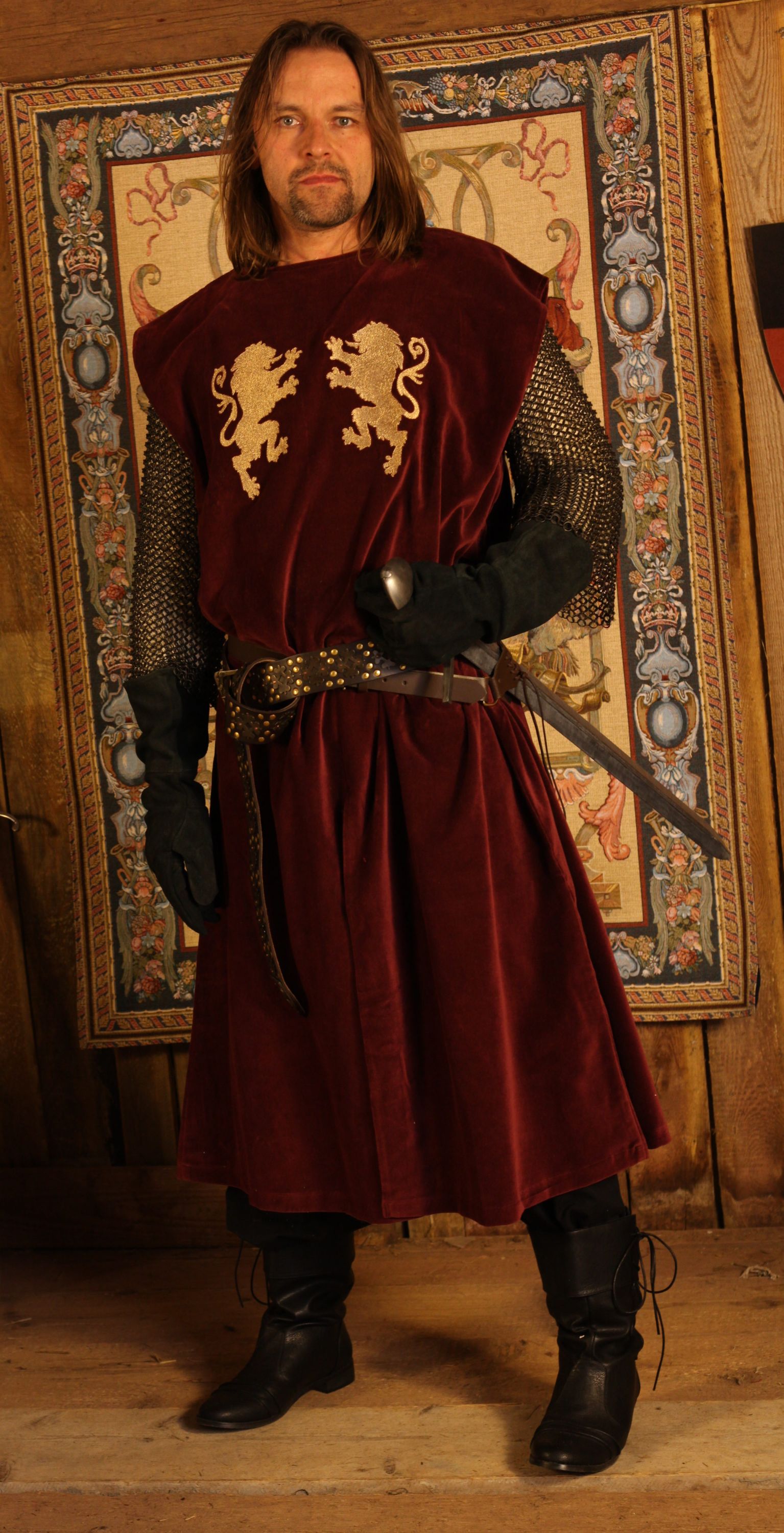
Medieval Lord Costume
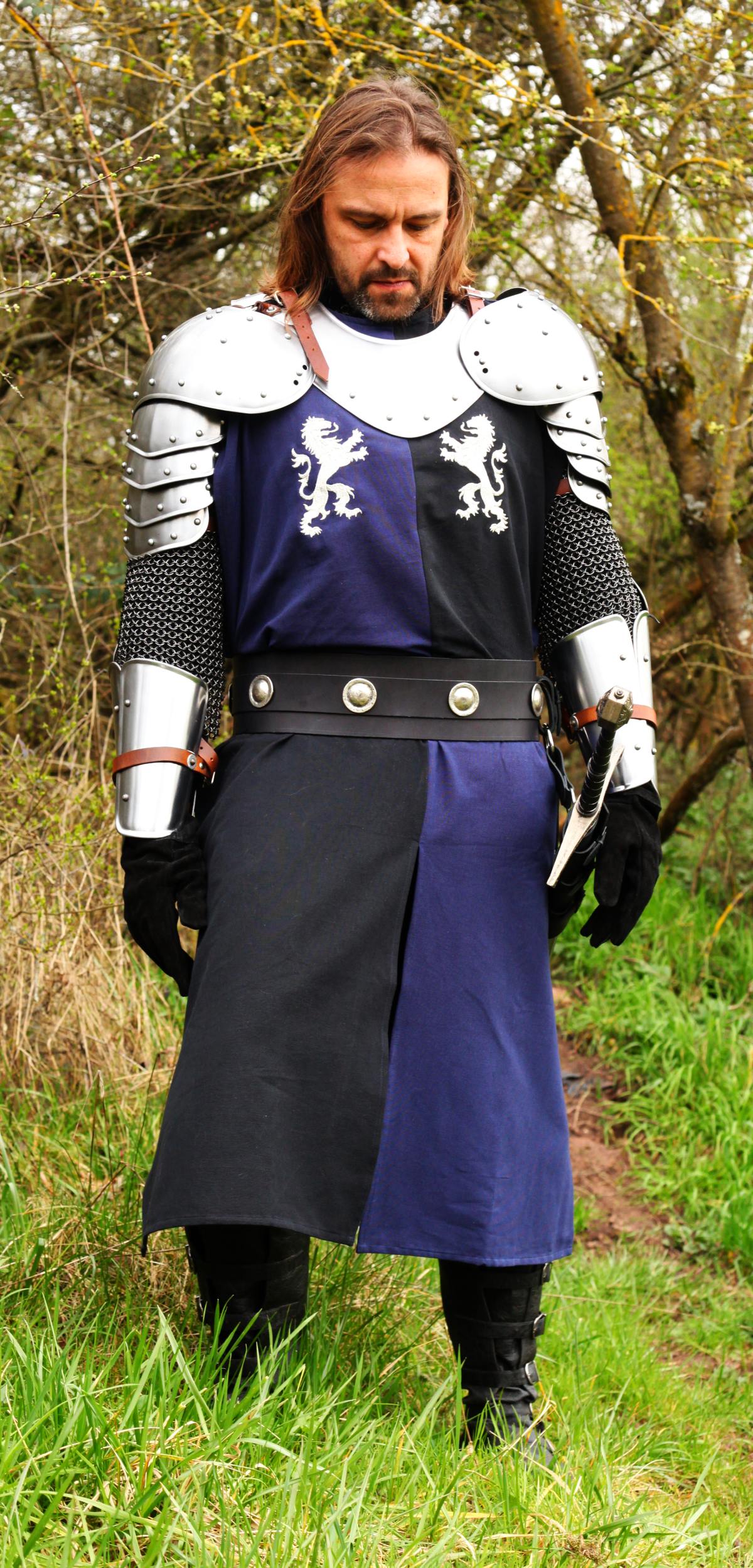
Here we have composed a combination which works perfect for a nobleman, the medieval upper class or for a medieval banquet, but as well as the outfit for the groom of a medieval wedding (or the bride's or groom's father) We have combined a cotton coat of arms with golden lion embroidery, a black medieval style trouser, gauntlets and chainmail.Underneath the chainmail the guy wears a quite simple medieval cotton shirt. Two belts, one with ornaments, the other one with a built-in scabbard make this outfit look waisted. A sword (here it is a LARP sword) and matching boots make the look pretty perfect I think.
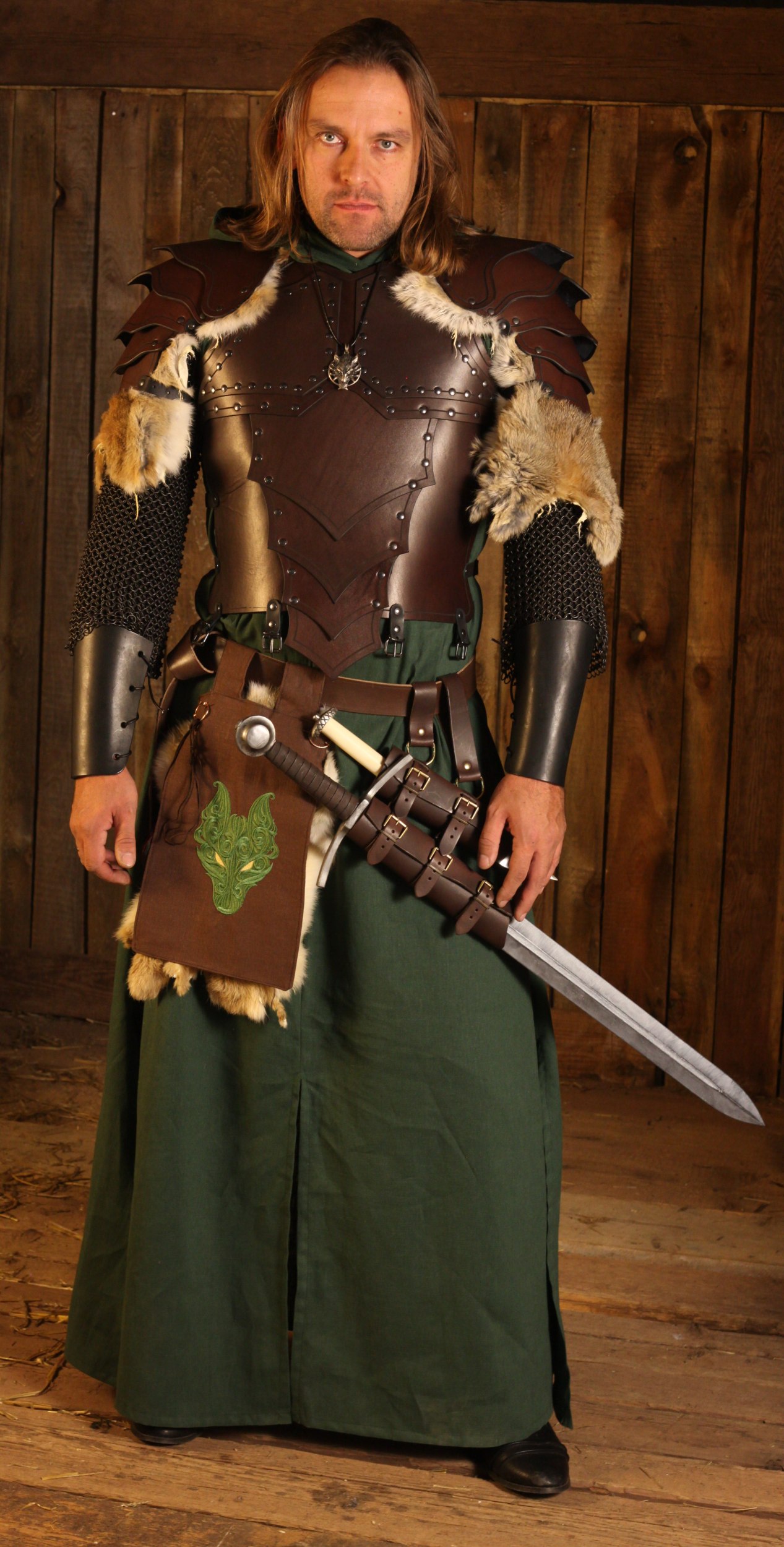
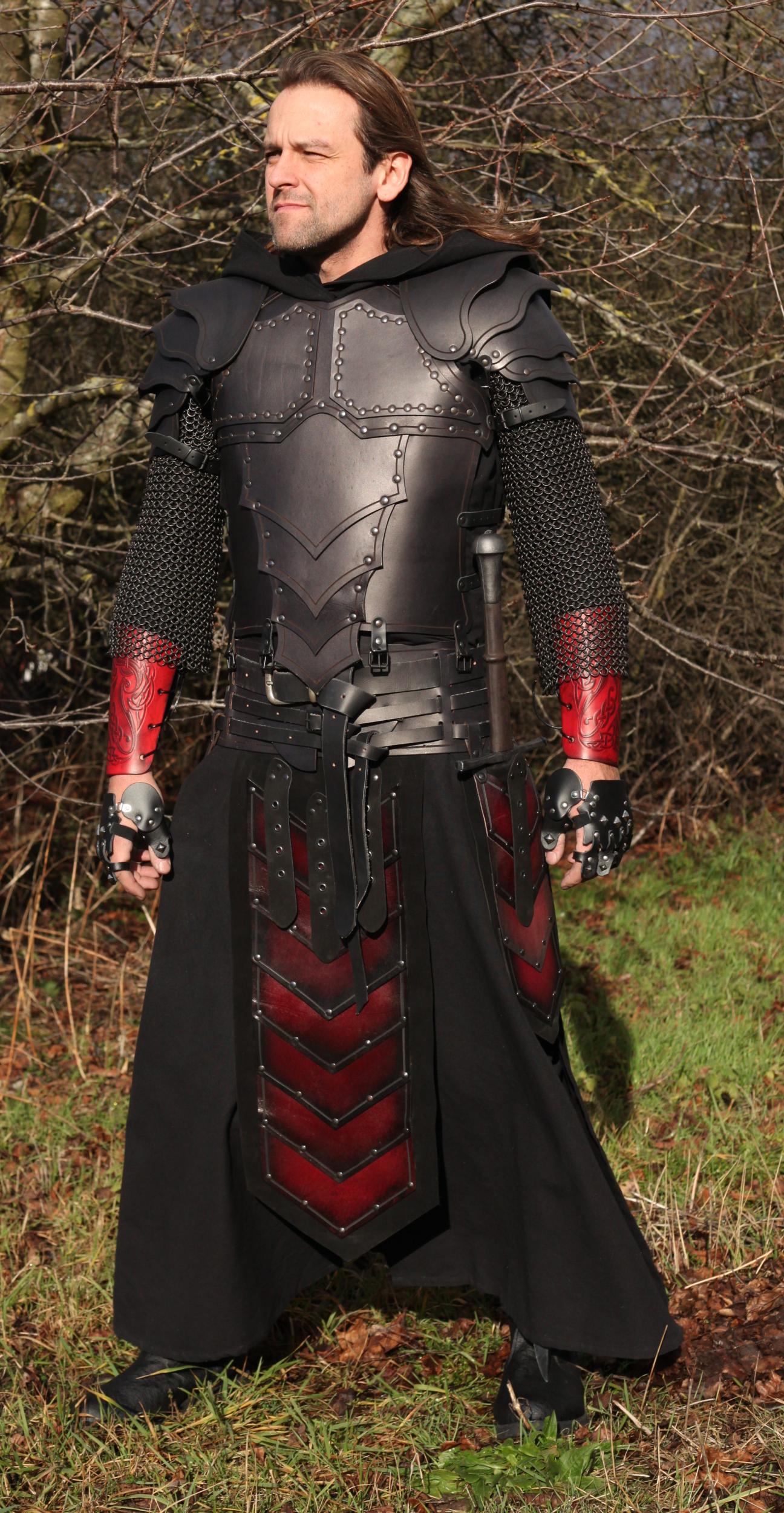
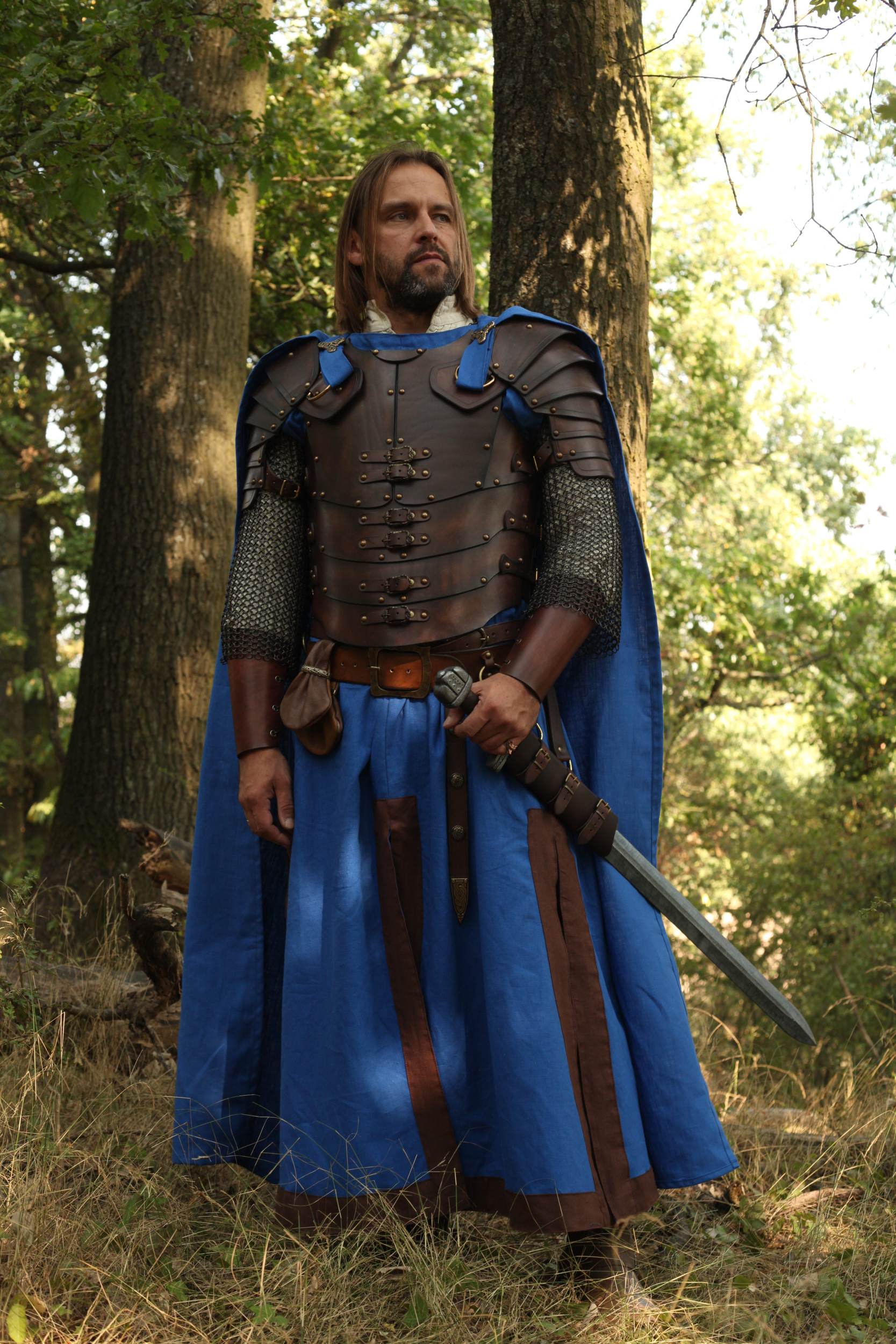
Lord Commander of the Night's Watch
Hier haben wir eine Kombination zusammengestellt, die sehr gut für einen Edelmann oder Mann des Adels passen könnte.Auch als Bräutigam für eine mittelalterliche Hochzeit (oder als Brautvater, bzw. Vater des Bräutigams) ist das Putfit perfekt geeignet. Unter dem edlen Waffenrock aus Baumwolle, der mit zwei goldenen Löwen bestickt ist wird ein Kettenhemd getragen, darunter wiederum ein beigefarbenes Hemd. Dazu eine schwarze Hose, schwarze Stiefel und Stulpenhandschuhe. Ein Gürtel mit Zierbeschlag und ein Gürtel mit integriertem Schwerthalter bringen Form in das Ganze. Dazu nach Belieben ein Schwert, hier ist eins unserer LARP Schwerter zu sehen.
The knight's garb: armor and helmet
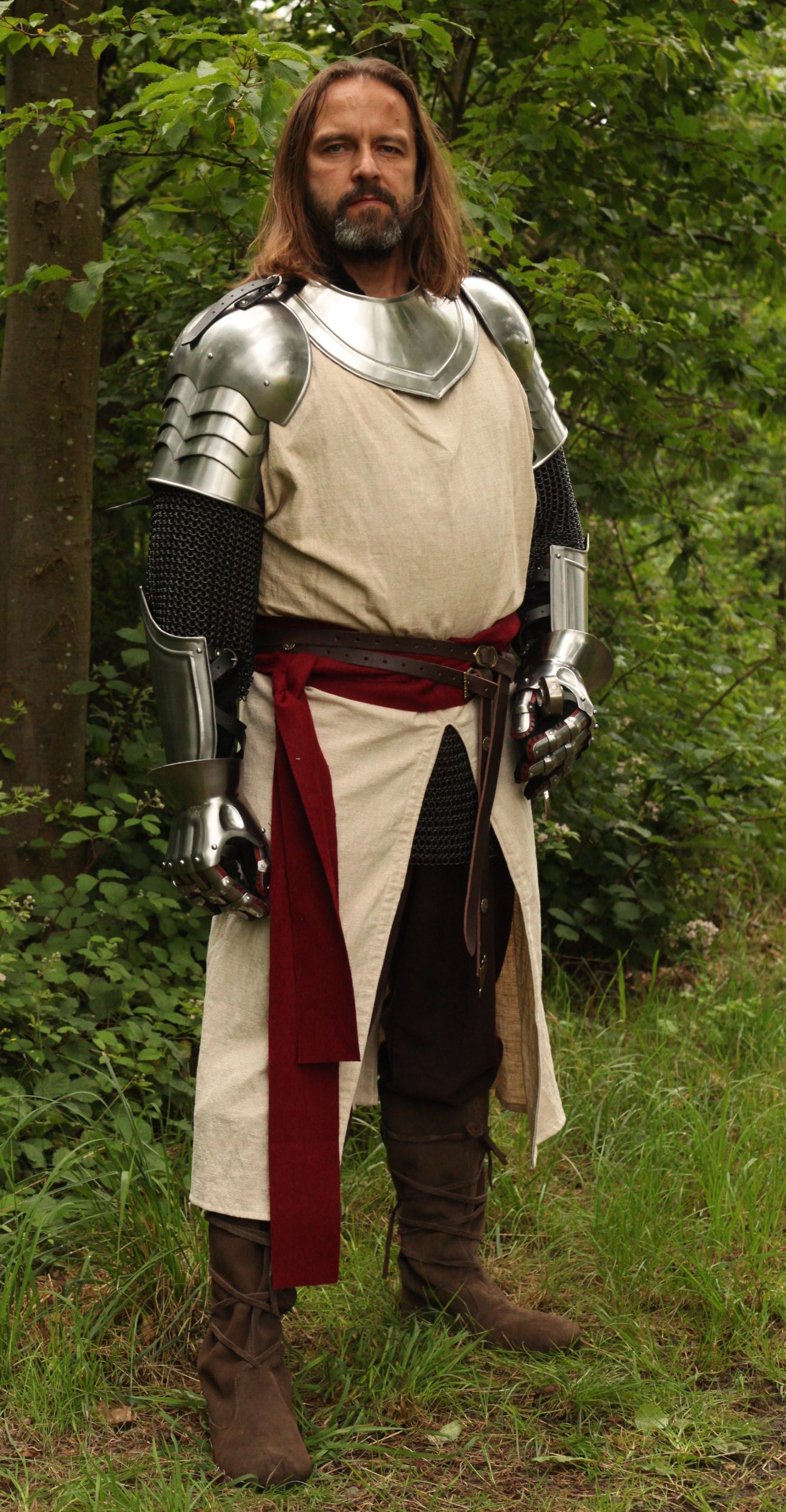
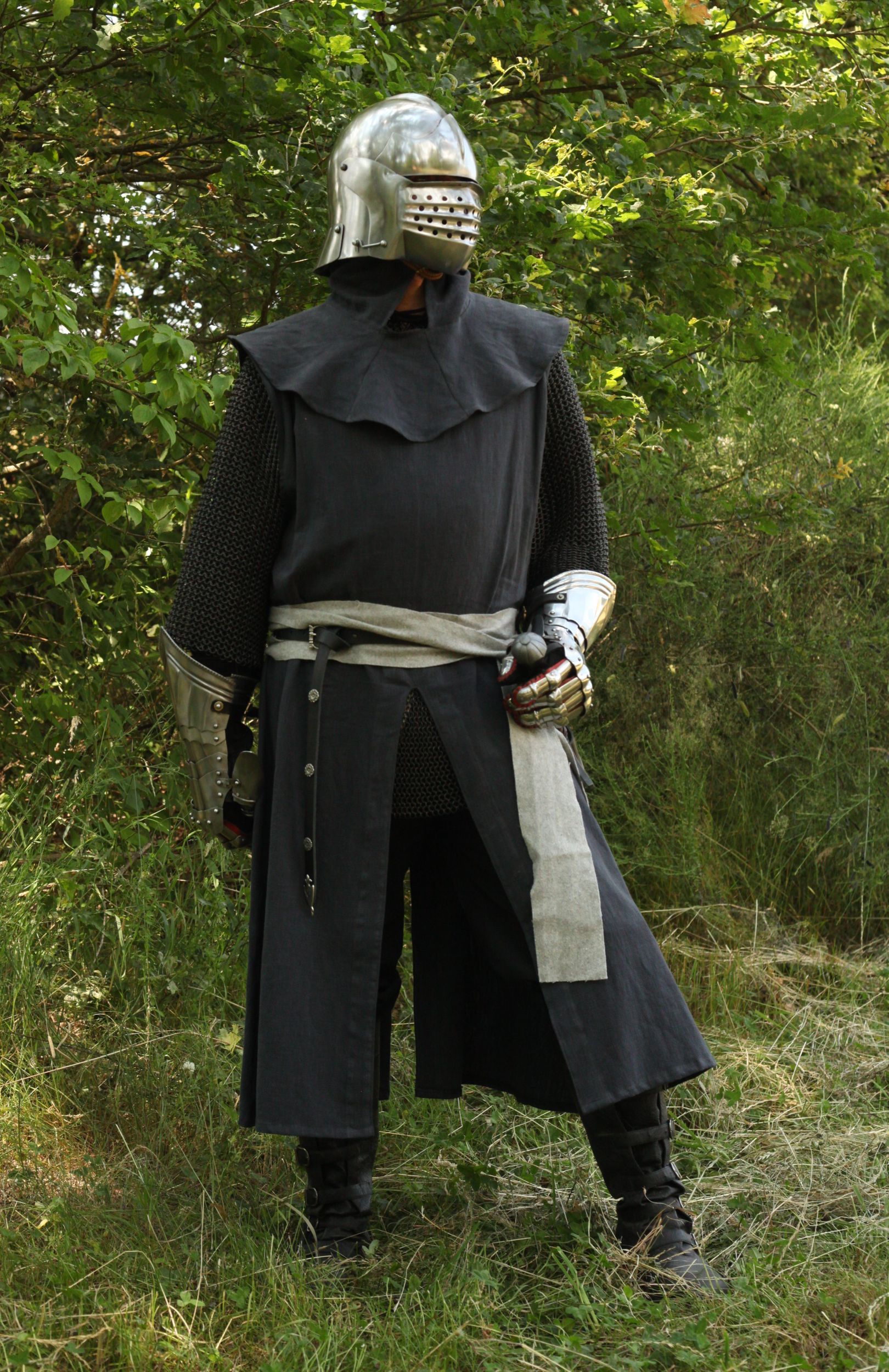
Amateurs and romantics always imagine the knight in the Middle Ages in shining armor and the Viking even with a helmet with horns on his head. But the full protective armor on the armored horse is reserved for the well-prepared battle or duel. The horned helmet of the Vikings never existed. As a knight, you began your training as a boy to acquire the necessary strength and skill. But even then, the full metal armor weighing 100 pounds was extremely challenging. However, the harness, plate collar, chain mail, breastplate and a helmet with nose guard are all splendid to look at, even at LARP! A Viking wears a colorful mixture of captured armor. Round shields and swords and perhaps the clasp helmet come from domestic production.


The knight outfit in the Middle Ages
In the Middle Ages clothing is expensive. Red, green or yellow colored clothes are reserved for the rich and therefore also for knights. Vikings dressed more uniformly with earth-colored shirts, tunics and later pants. Depending on rank and property, leather and fur are added. Even as a knight, you have to adapt your outfit to the order of the estates and the fashion in the Middle Ages. Depending on the century, you wear tights, leg warmers and a flowing shirt. Under or over the armored shirt or the gambeson comes a short or long tunic in green, red or brown, which is gathered with a wide belt made of leather. The darker liripipe keeps the upper body warm. Bracers and greaves made of leather or metal and of course valuable boots complete your garb. If you wear your selection powerfully and with pride, this is no longer a knight costume for men, but your personal expression.
Medieval clothing for ladies
A LARP knight has it easier when choosing his role. Fighting is the motto. Ladies in LARP choose their medieval garb according to very different roles. Buccaneer, tavern wench, rogue or witch - do you want to fight or to care in the Middle Ages? Shirt and pants or dress, boots and cloak? Do you also want weapons? In any case, a coat will look good with your dress. In medieval LARP, herbalists, healers and druids naturally wear belts, if only to carry their bags and equipment. The spectrum for the costumes of the ladies ranges from the Viking shieldmaiden fully equipped in leather to the ranger to the market woman and sutler. What is your desire? Merge with your role in LARP and wear yourself and your clothes with pride.


Medieval shoes and boots
For all times and also in the Middle Ages it is true for ladies, knights and gentlemen: Shoes and boots show the rank and are a central part of the clothing. Of course, you have to be rich to be able to afford leather boots and fine shoes in black or brown in the Middle Ages. As a peasant, on the other hand, you wear wooden slippers. You couldn't even get leather, because only the nobility was allowed to hunt in the Middle Ages. The later in the Middle Ages, the more important the profession of tanners and dyers. And even at LARP-Fashion.com we produce for ladies, knights and gentlemen a gar splendid footwear made of leather. Gauntlet boots, lace-up boots, Viking shoes and even elaborate medieval boots with buckles. A half-boot made of leather to lace up for the ladies or the precious pirate boot with buckles and cuffs. Whether at the LARP, the medieval market or quite private: here you will find noble footwear for eternity.
Medieval clothes for knights and other people
As mentioned above, under his protective equipment and weapons, the knight also wore normal clothes. This was already true because chain mail, bracers and greaves would otherwise have scratched the skin quite terribly. The lower garments were made of linen or nettle, because hemp and wool were also scratchy. Modern cotton was rare in the Middle Ages. Cotton, like brocade, was very expensive as an import. But unlike the rough fabrics worn by poor people, knights in the Middle Ages could afford the fine fabrics. So they wore linen, nettle, cotton and hemp. The noble ladies were dressed in silk, later velvet was added. Those who had money could also dress colorfully. The 90% of the population who lived as peasants wore natural and earth-colored shirts and tunics, underwear was thought of only in higher circles. But the nobles loved colors. Black and brown for the leather and coats, but otherwise they loved the red, green and yellow. Purple was reserved for the highest ranks of the church.
Garments and pants
The garments and dresses in the Middle Ages were, of course, primarily intended to keep warm and preserve pure morals. But with the emergence of cities and larger settlements from the year 1000, it was much more about the line of status. Clothes served as a sign of class and wealth. People wanted to be able to tell from afar who they were dealing with. Although medieval dress did not change much over the centuries, the regulations became stricter as the church became more powerful. While leggings and later pants were still worn by ladies and gentlemen in the early Middle Ages, this soon changed in the 13th century. From then on, pants for women were an impossibility for the next 800 years. Unless, of course, you were a Viking or belonged to the Celts or other tribes outside courtly society in Western and Central Europe.
The garb for gentlemen
The peasants, apart from the shirt, tunic and clogs, had at most a simple cloak cape with a button on the shoulder. The garb for knights and lords looked different a lot. The shoes or boots were made of sturdy cloth or even nailed leather. The leg warmers often had longer leg parts, which could be used as a kind of socks. When it was cold, calf wraps or gaiters were attached around them. The gaiters were made very strong, because they had to resist thorns and brushwood. Pants for over it existed from the 11th century in the most different forms. The famous Viking Rus pants or the Thorsberg pants found in the bog show the spread of these ideas. In contrast, the Germanic and Celtic peoples had already worn pants in black, brown and natural colors before Christ and had been ridiculed by the Romans for it. Like many other things, trousers had to be reinvented after the early and dark Middle Ages. Among the many forms of pants, the most famous is the bloomers, the lower end of which were stuffed into the leg warmers or boots. Then they puffed up. Over the trousers also the knight wore a gambeson, tunic or two kinds of tunic. The short tunic fit for underneath. The longer upper tunic was worn over it and perhaps taken off in the house. In cold weather, the hoode cowl was worn over it to keep the neck, shoulders and chest warm. Last came the coat in black, brown or dark earth colors, which could be either a converted blanket or a precious fur-trimmed work of art. The latter then did not need to be black or brown, because it was worn to raise attention and admiration.
Tunics and the garb of the ladies
Whether it was a house, a castle or a palace, it is important to remember that it was always only slightly warmer inside than outside. For the medieval woman, clothing looked very similar to that of men. However, she wore an undergarment and an outer garment. The undergarment was often white linen and was allowed to peek out a little at the sleeves and neck. Braids in red or green decorated the upper dress. The sleeves of the upper dress could be extremely wide and showed the sleeves of the lower dress when the arms were bent. The breast cloth was wrapped around the upper body underneath. Wide belts were worn by both sexes. They contained hooks and pockets in which all sorts of things could be placed. The pants bag, that is, the pantsack was developed much later. Ladies wore veils or hoods on their heads, while for men headgear was uncommon, unless protective hoods or helmets were worn.
And the armament?
Do you, as a warrior, pirate or real rogue, feel like using medieval weapons? Then we recommend a trip to our medieval weapons page. Here you will find stylish and precious LARP weapons, but also shields, knives and the good broad axe. Throwing knives and war scythes, the Viking sword or the stiletto - for the weapon lover we provide the whole medieval equipment. But always keep in mind that no weapon makes as much impression as your whole personality, which you proudly wear to market with your clothes!