


Medieval Jewellery
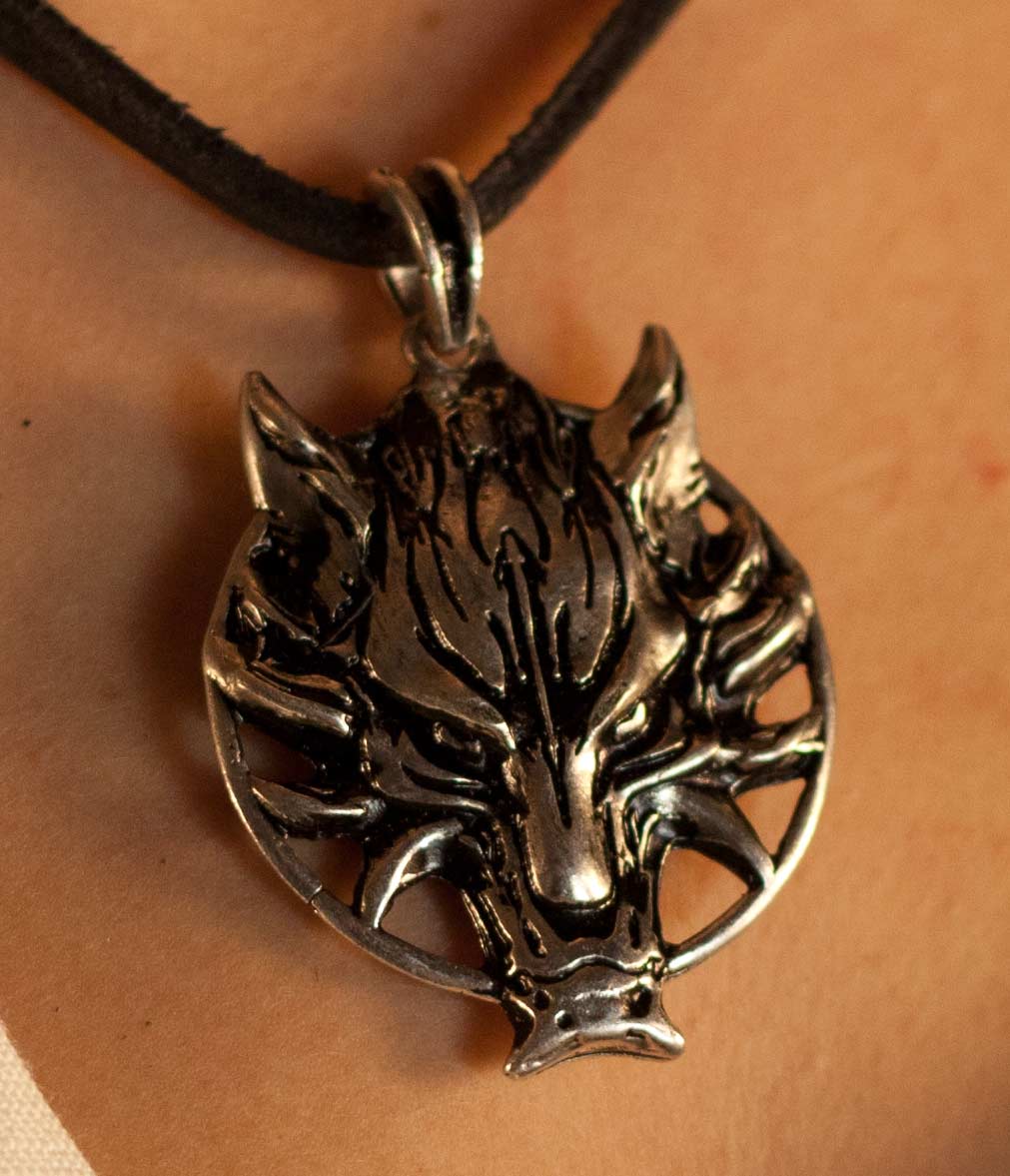
Fenris pendant
Fenris is a fearsome wolf from Norse mythology which translates from Old Norse as 'fen-dweller'. Fenrir was the Son of demi-God Loki and was a key figure in the life of Odin. With such history behind Fenrir this pendant is a great way to show the Norse heritage of your character or personally with the snarling face of the wolf. The pendant measures 40mm x 48mm and comes with a leather neckband as shown in the image.
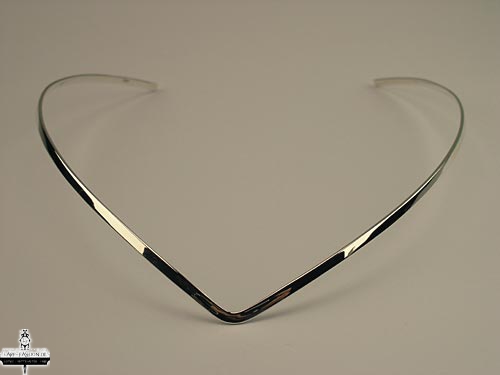
Medieval Silver Tiara
Perfect for injecting elements of distinct Medieval elegance and sophistication into your Larp wardrobe, this Medieval Silver Tiara is sure to become a welcomed addition to your accessory collection. Historically inspired, this beautifully crafted tiara will open your eyes to traditional Medieval design that will complement and enhance any Larp, Renaissance, Medieval or Fantasy costume. Crafted to the highest possible standard, this silver coated tiara is the ultimate accessory for any Medieval princess.
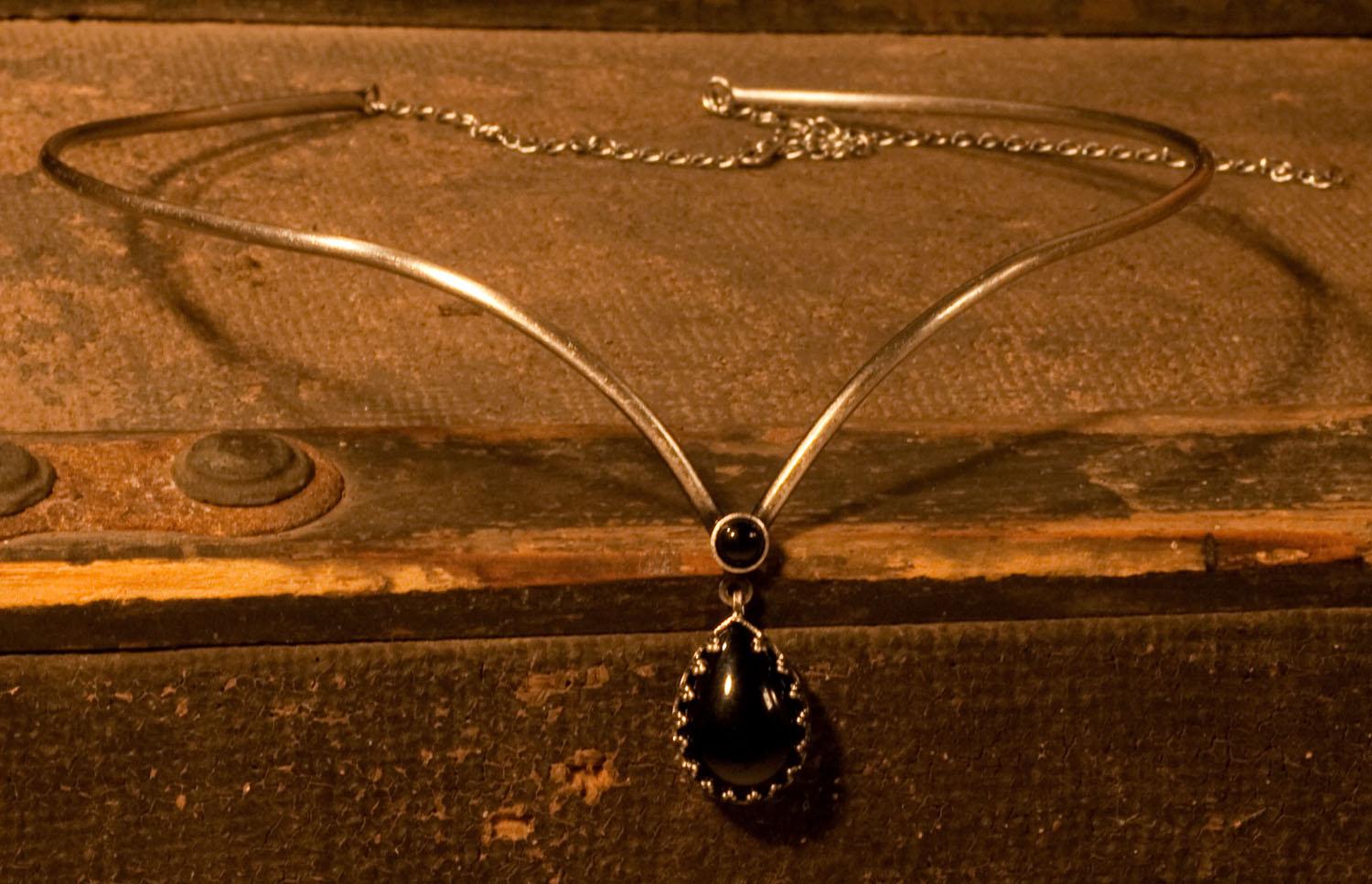
Tiara Tear of Awareness
The Tear of Awareness Tiara is a must have magical item for Wizards, Elves and more. This medieval style tiara is perfect for inclusion in treasure, tournament prizes or loot from quests. Made from lead-free tombac in an antique-silver style, the tiara is perfect for bringing some real colour to any LARP character or complementing any medieval outfit for an event or occasions. The tiara is decorated with high-quality glass stones which are available in several colours including black, red, green and dark blue. The tiara fits any head by fastening with an adjustable cord at the back.
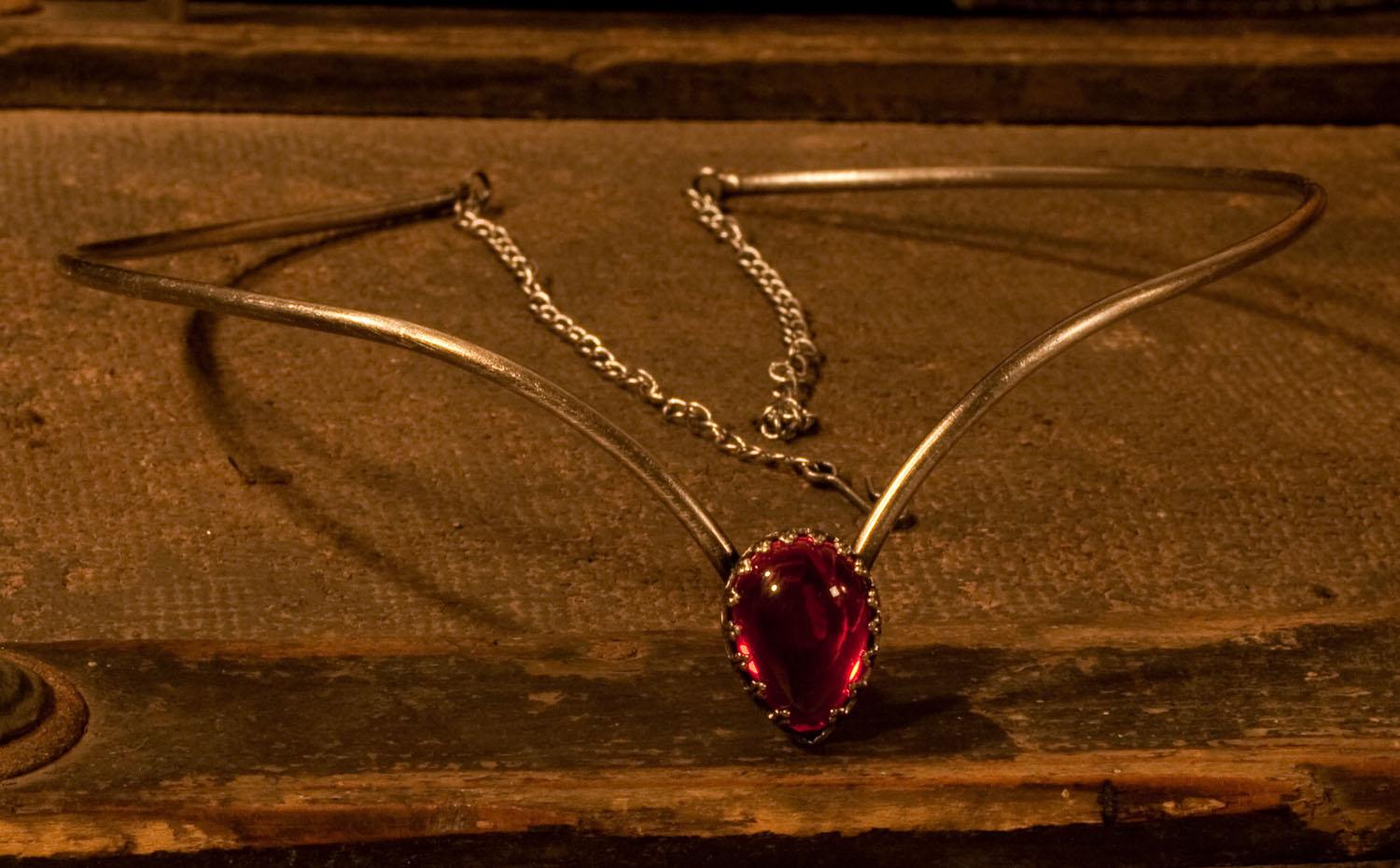
Tiara Drop of Simplicity
It may be called the drop of simplicity but this elegant tiara is anything but simple. Made from a lead-free tombac, it's a piece of jewellery that is perfect for gothic characters such as witches and vampires. The tiara is available in silver or a more antiquated version which is ideal for characters which are thousands of years old. The tiara is decorated with high quality glass stones which can come in several colours including black, red, dark blue and purple. The tiaras are fastened with an adjustable chord which makes them ideal for any head size.
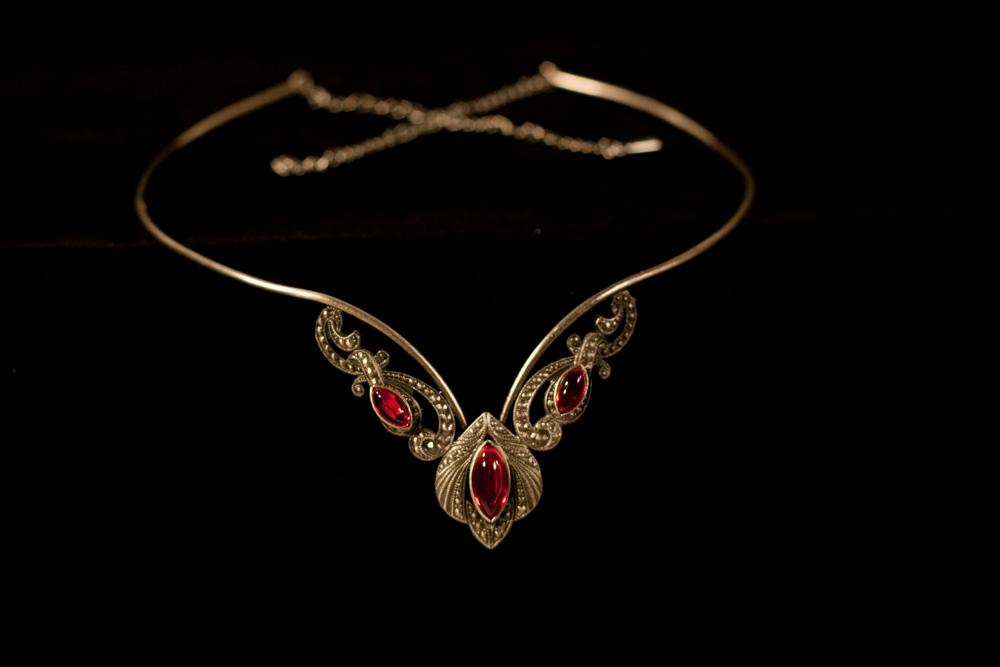
Tiara Goddess of Sublimity
Embracing distinct design elements that have become synonymous with a number of ancient cultures, this beautifully crafted Tiara Goddess of Sublimity will introduce your Medieval accessory collection to artfully crafted design that is sure to turn heads, wherever you go. Ideal for complementing and enhancing a wide range of Renaissance, Fantasy, Larp and Medieval costumes, this authentic Medieval tiara is made from lead free tombac and has been decorated with high-class glass stones. With its antique silver finish and intricate detailing, this Tiara is sure to command attention, whether you're attending a Medieval banquet, wedding or festival.
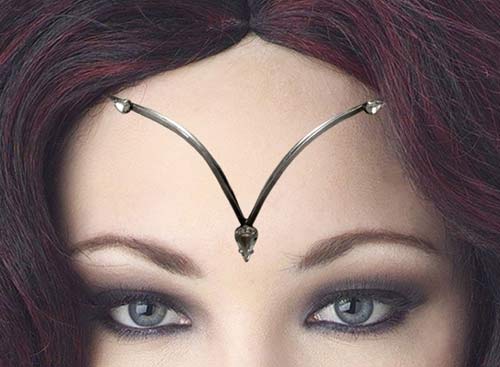
Tiara Arc of Wrath
Appropriate jewellery for gothics, medieval people, witches and fantasy. Wonderfully worked out, made of lead free tombac, either silvery or antiquely silvery, decorated with high-class glass stonesAll tiaras can be closed by an adjustable cord, fitting any head
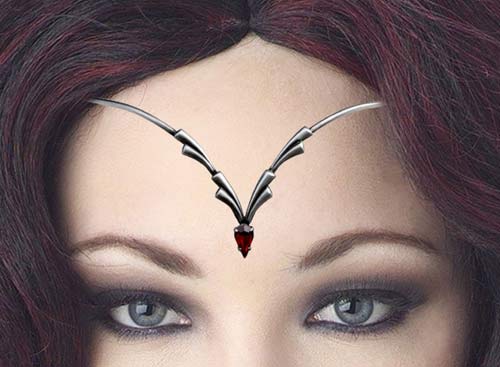
Tiara Arc of Sanity
With its air of mystery and enchantment, this Arc of Sanity Tiara is the ideal accessory for a Gothic, Medieval, witch, or fantasy look. Beautifully crafted from the finest lead free tombac, this captivating piece of Medieval jewellery is adorned with premium glass stones that glisten and dance under the light. Available in both burgundy and crystal, this gothic tiara is secured with an adjustable cord, meaning it will fit any head perfectly.
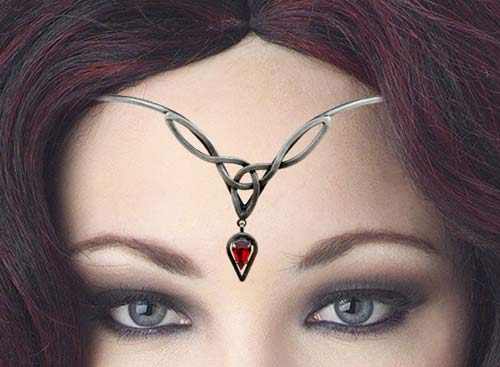
Tiara Triquetta
A gothic style tiara that is ideal for characters in a LARP scenario, a themed event or your gothic style. The tiara is perfect for Vampyres, Witches and other gothic characters to show their affiliation to the dark arts of the fantasy world. It features a knot-style design with a high quality glass stone dangling from the lower point just between your eyes. The stone is available in several colours including black, green and burgundy and the tiara is made from lead-free tombac. It is fastened with an adjustable cord making it fit any head.
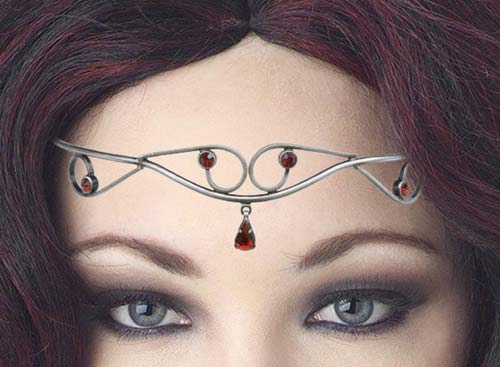
Tiara Elven Arcs
Channel the power of the Elves with this Elven arc tiara which is perfect for gothic or magic characters. The tiara features an arc style made from lead free tombac with swirls and arcs to create an elegant piece of jewellery which will look at home on the head of a witch or vampire alike. The tiara is decorated with high quality glass stones throughout the design with different stones available to suit your style or align with your abilities. The tiara fastens with an adjustable cord around the back ensuring they fit any head size.
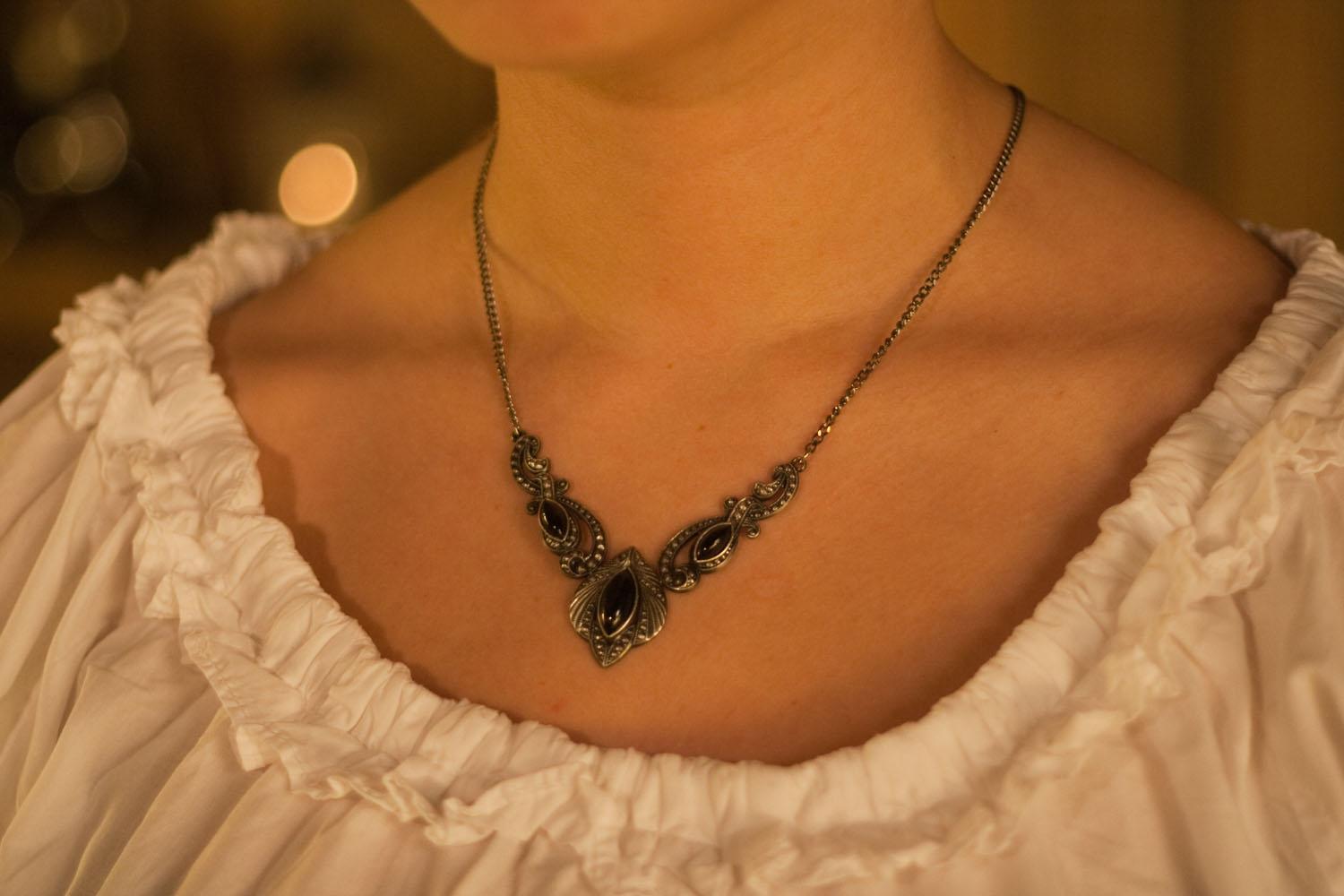
Necklace Goddess of Sublimity
The perfect finishing touch to any Gothic, Medieval, or Fantasy look, or an ideal Larp gift for a friend with a passion for the magical and the mystical, this enchanting Goddess of Sublimity Necklace is wonderfully alluring. A great accessory for any Larp, cosplay, or fantasy outfit, this stunning necklace is carefully crafted from lead free tombac and decorated with premium quality glass stones. Secured with an adjustable cord, this Medieval necklace can be worn at a variety of lengths to complement your look.
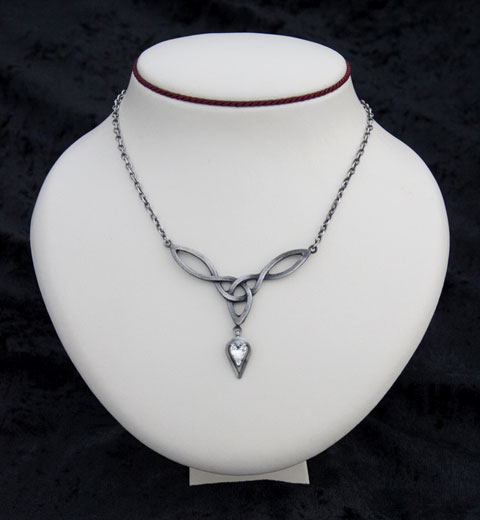
Historically Inspired Celtic Heart Necklace
Artfully crafted to the highest possible standard, this Historically Inspired Celtic Heart Necklace will allow you to enjoy a number of traditional design elements that have become synonymous with this fascinating period of time. Ideal for adding an endearing dimension to your Larp, Renaissance, Fantasy or Larp wardrobe, this stunning Celtic heart necklace is perfectly equipped to add elements of class, sparkle and elegance to a wide range of Viking inspired looks. Made from lead free tombac, this striking necklace features an antique silver finish, as well as high-class glass stones that add another head turning dimension to this wonderful Medieval jewellery piece.
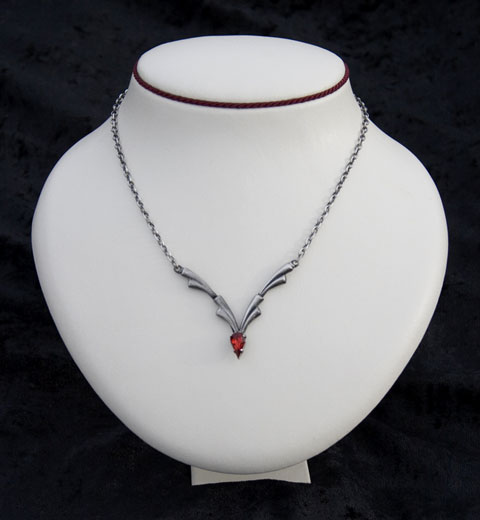
Necklace Arc of Discretion
Appropriate jewellery for gothics, medieval people, witches and fantasy. Wonderfully worked out, made of lead free tombac, either silvery or antiquely silvery, decorated with high-class glass stonesAll necklaces can be closed with an adjustable cord, so you can wear it in the desired length
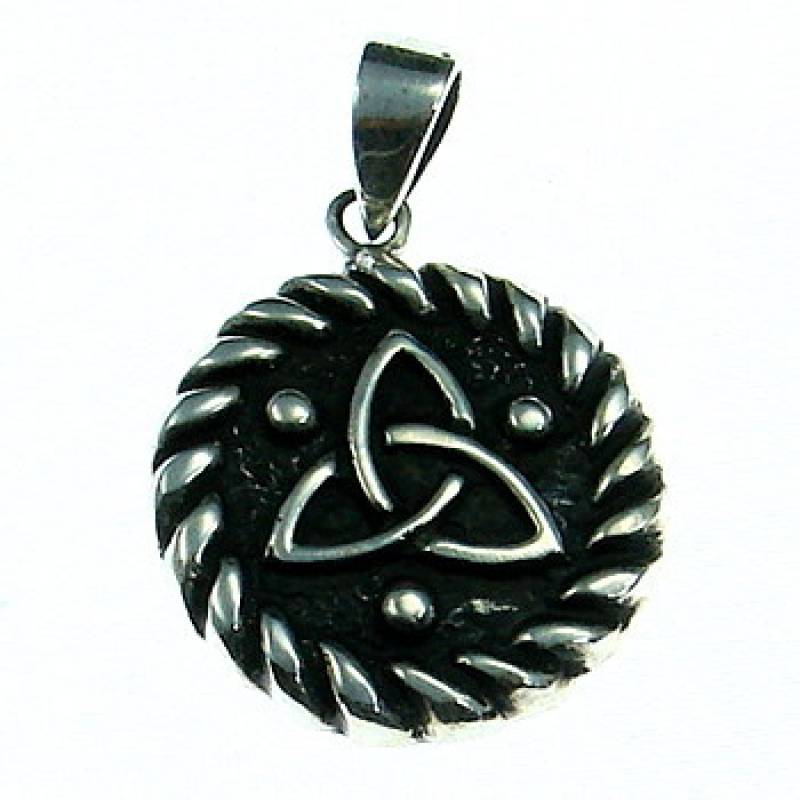
Celtic Silver Pendant Triquetta 2cm
This pendant comes with a leather or cotton ribbon.Dimensions: 2 cmWeight: approx. 3.1 gr.
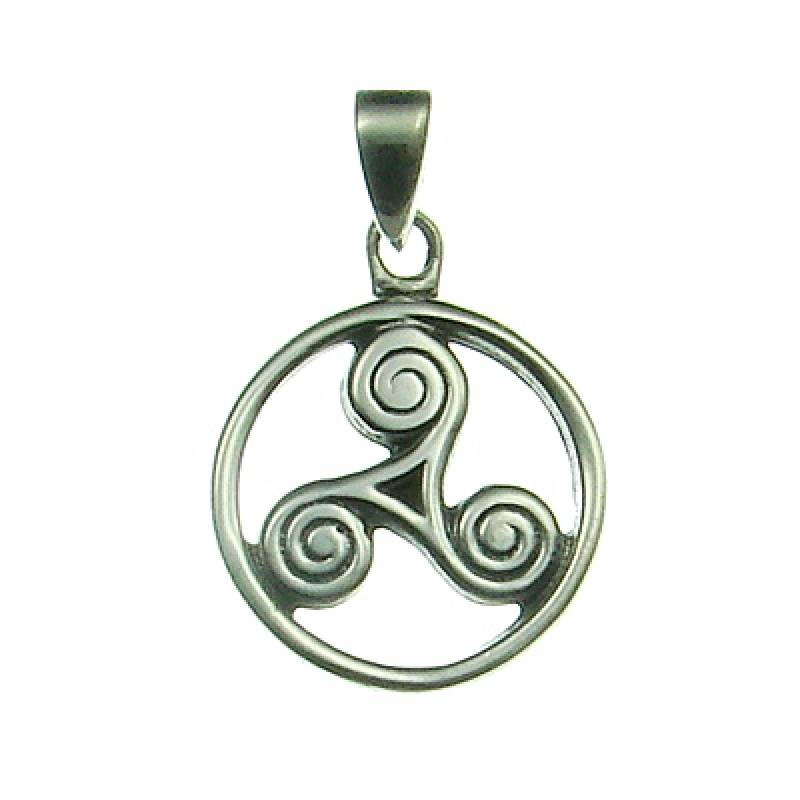
Celtic Silver Pendant
This pendant comes with a leather or cotton ribbon.Dimensions: 1.7 cmWeight: approx. 2.3 gr.
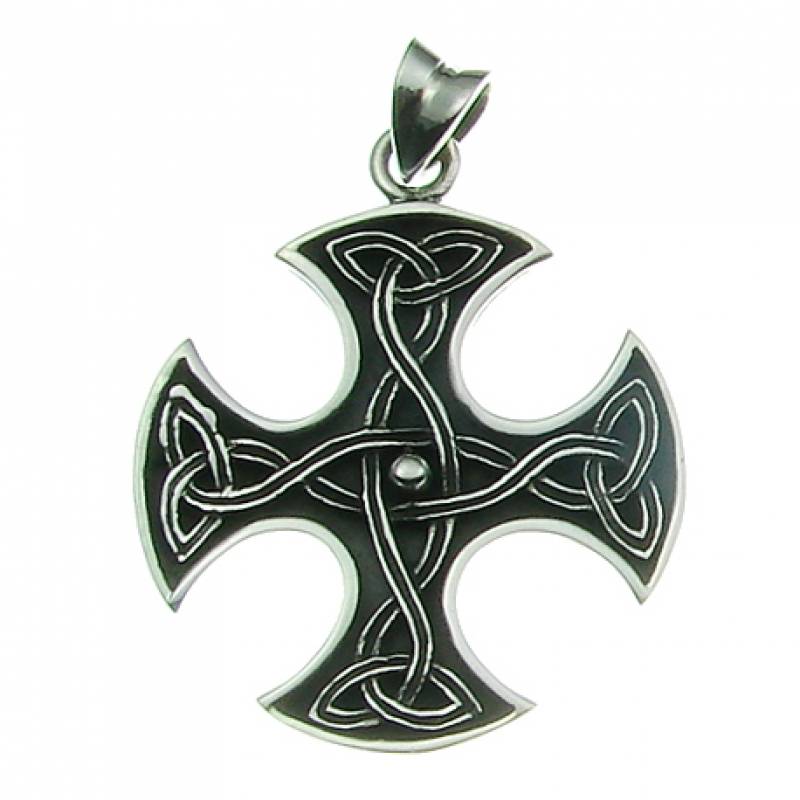
Celtic Silver Pendant
This pendant comes with a leather or cotton ribbon.Dimensions: 3 cmWeight: approx. 6.3 gr.
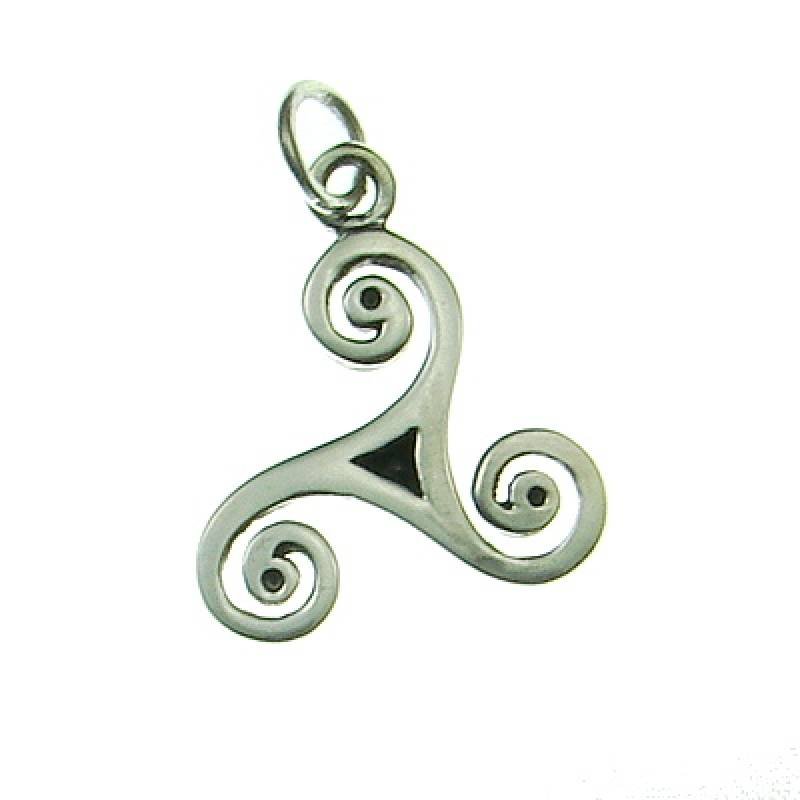
Celtic Silver Pendant
This pendant comes with a leather or cotton ribbon.Dimensions: 2 cmWeight: approx. 2.2 gr.
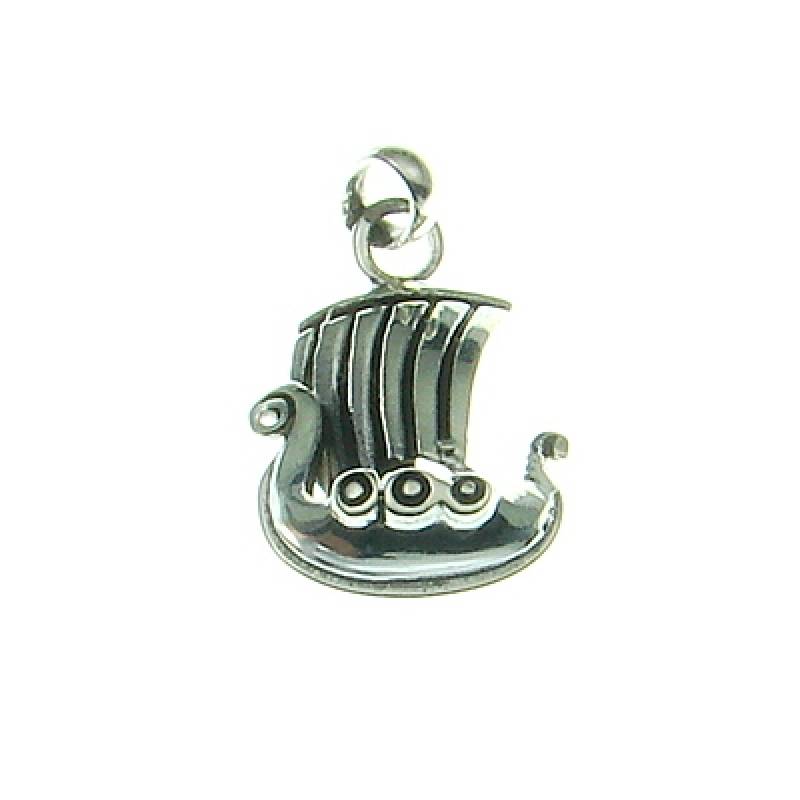
Silver Pendant Viking Boat, small
This pendant comes with a leather or cotton ribbon.Dimensions: 1.5x2 cm Weight: approx. 2.3 gr.
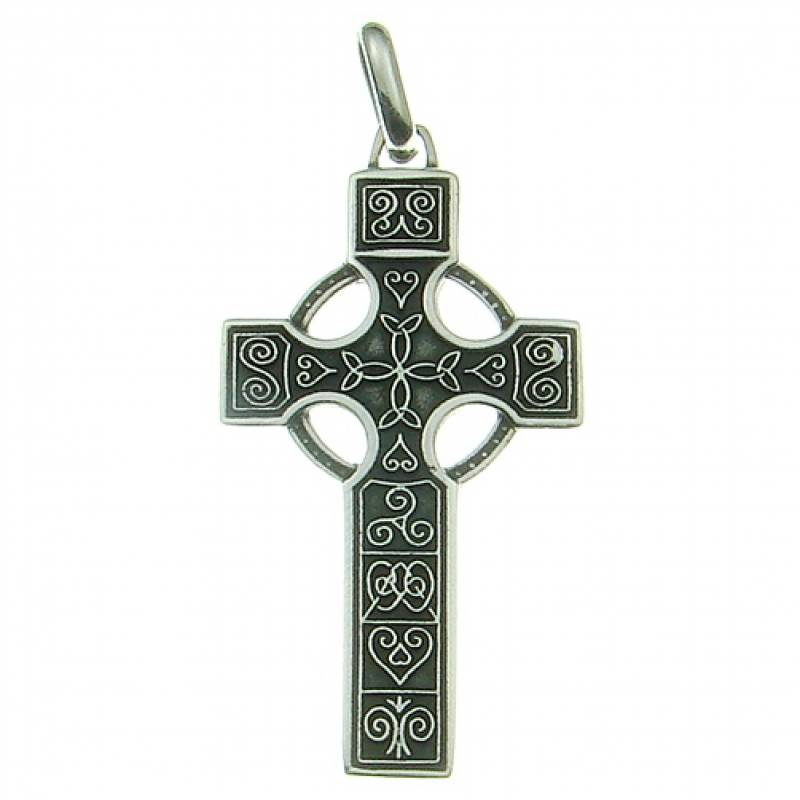
Celtic Silver Pendant big
This pendant comes with a leather or cotton ribbon.Dimensions: 2x3.5 cm Weight: approx. 3.5 gr.
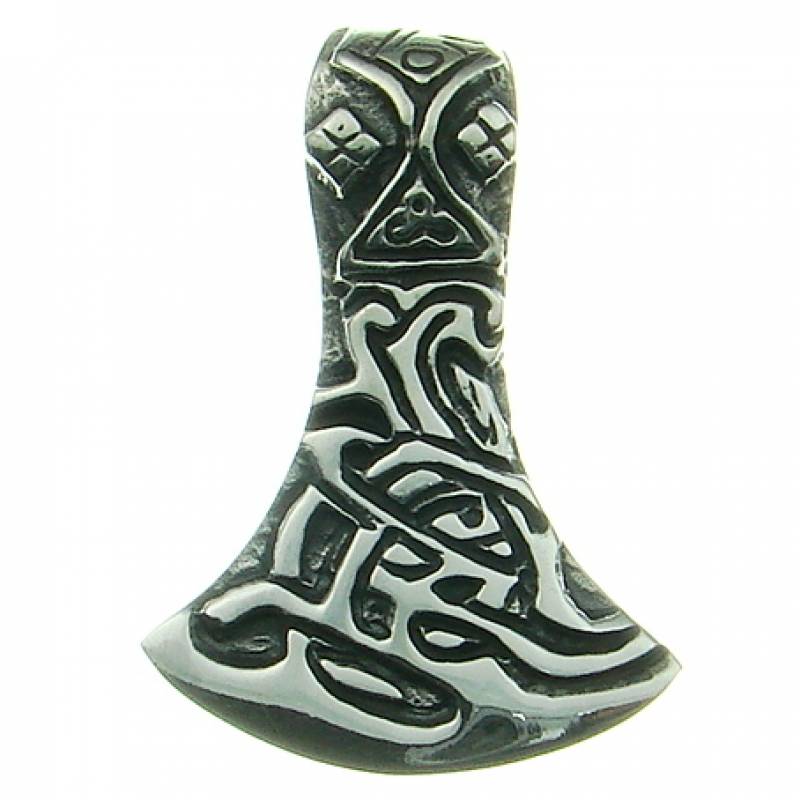
Silver Pendant Viking Axe massive
This pendant comes with a leather or cotton ribbon.Dimensions: 3.8x2.8 cm Weight: approx. 14.3 gr.
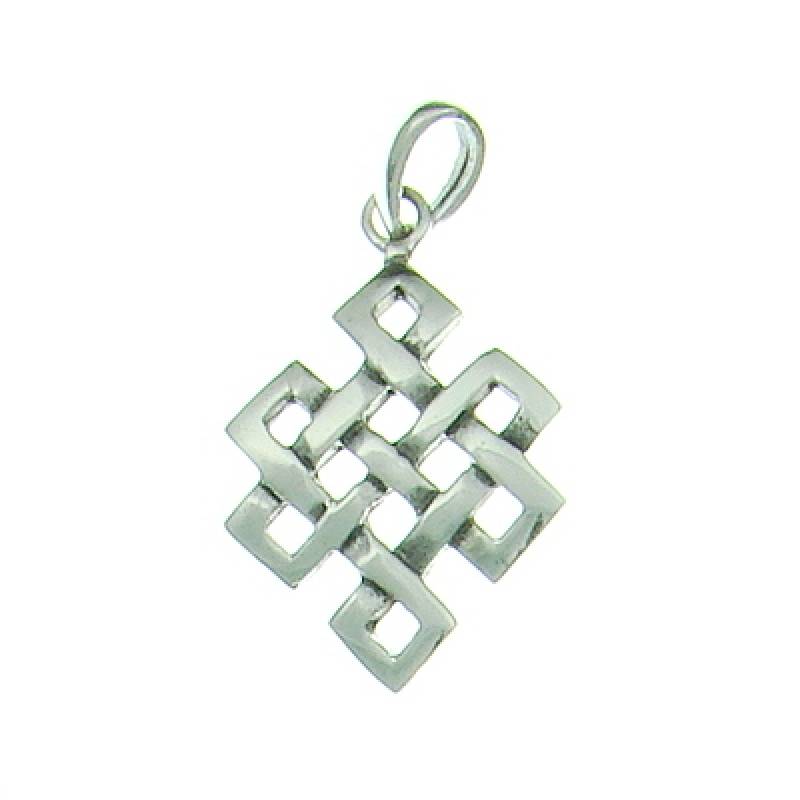
Silver Pendant Endless Knot
This pendant comes with a leather or cotton ribbon.Dimensions: 2.5x1.5 cm Weight: approx. 1.7 gr.
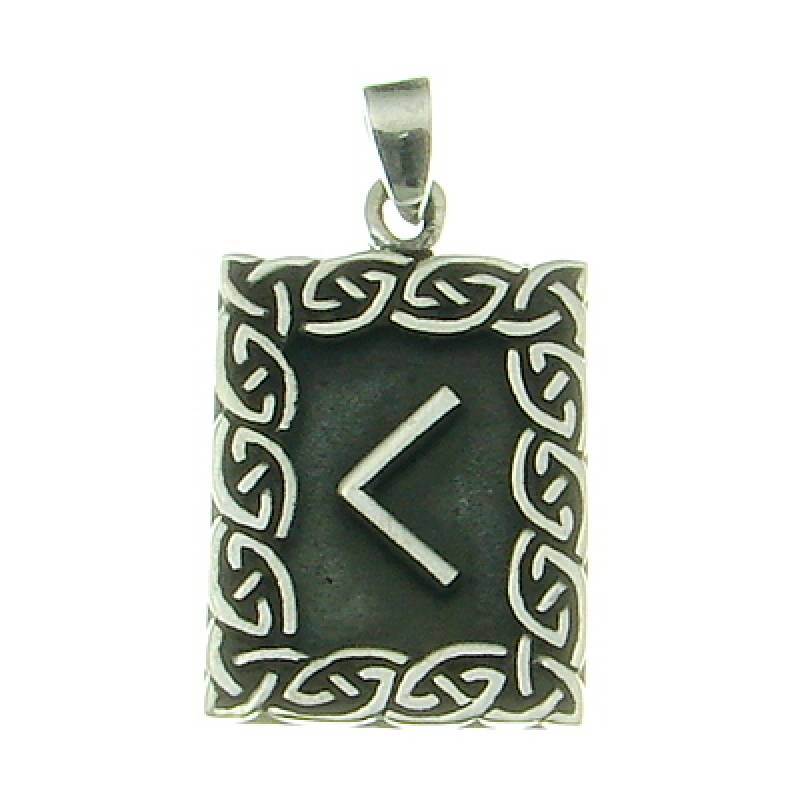
Silver Pendant Kenaz
Meaning: enlightenmentSize: 2.2x1.7cmWeight: appr. 6 gram This pendant comes with a leather or cotton ribbon.
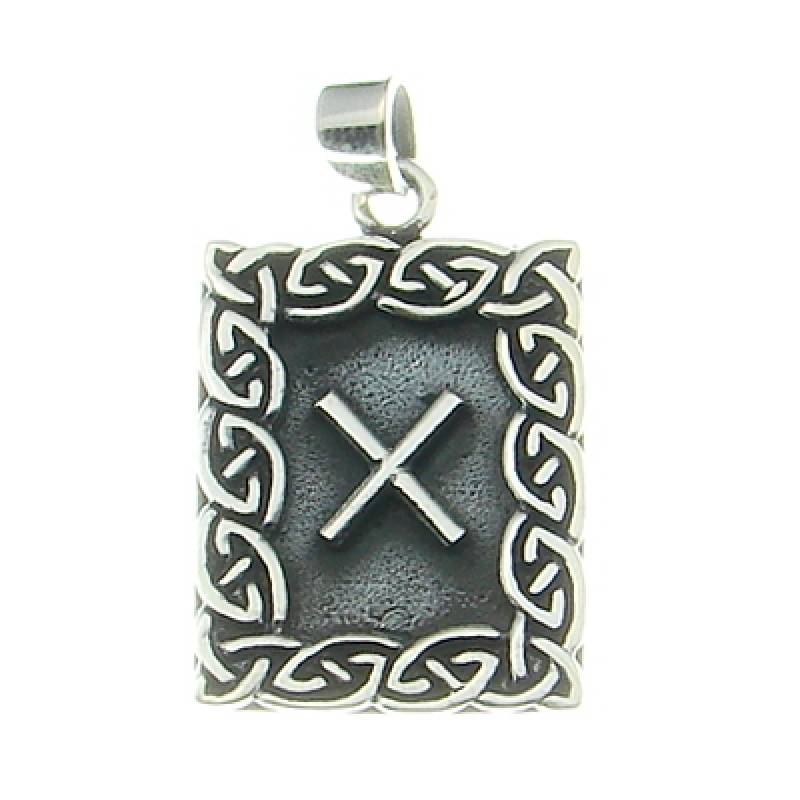
Silver Pendant Gebo
Meaning: spiritual presentSize: 2.2x1.7cmWeight: appr. 6 gram This pendant comes with a leather or cotton ribbon.
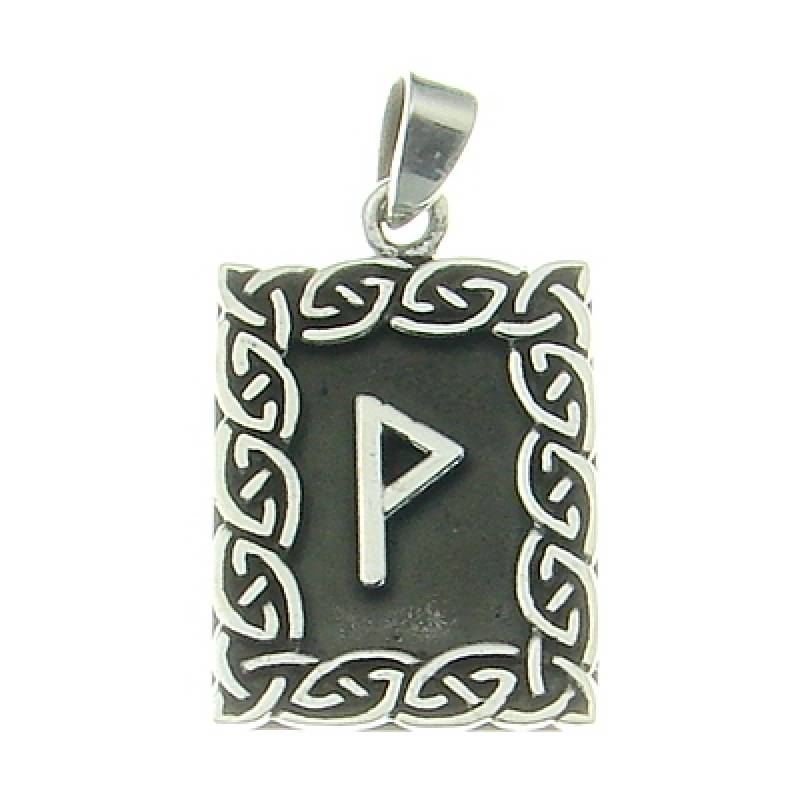
Silver Pendant Wunjo
Meaning: Happiness and balanceSize: 2.2x1.7cmWeight: appr. 6 gram This pendant comes with a leather or cotton ribbon.
Medieval jewellery
Jewellery has accompanied mankind since the beginning of time. Even the first humans adorned themselves with shells, stones, leather or bones. This is shown by some finds from ancient times. Exactly such materials were also used by the Vikings, Celts and Anglo Saxon tribes in the early Middle Ages. Over the centuries, however, semi-precious stones, silver, gold and finally genuine precious stones were also used as jewellery in the Middle Ages.
 Jewellery articles of power
 Jewellery articles of power
Inspired by the captured or found jewellery from the antiquity of the Romans and Greeks, a true variety of jewellery emerged over time. This ranged from the first bow fibulas and brooches, to rings and earrings, to chokers and finally to headbands and crowns. Pendants in every shape and form came into fashion.
The pendant of silver on the chain, the pendant of bronze on the bracelet or even the pendants of gold for the ears were as valuable as they were convenient, because they could also be taken off. Jewellery always served as a status symbol and a sign of power. No wonder that the weapons of the Vikings, Celts and Germanic tribes were also decorated with special jewellery and thus increased in value.
Jewellery articles of veneration
Even the old term "gem" shows the great symbolic significance that jewellery had in the Middle Ages. Deities of all kinds and peoples were to be worshipped with the jewellery or their power was to be transferred to the wearer. The high dignitaries of the Christian Church decorated their tiaras or crosses with precious stones. In other religions or myths, it was the corresponding heroes and deities who were to be invoked. And if their pictorial representation was not possible or permitted, powerful symbols had to hold the fort. For the Celts, it was the sun cross or the tree of life. For a Viking, Thor's hammer or the knot of Wotan was to give strength in battle.
Leather and wood for the people, silver and gold for the nobility
 When we speak of jewellery made of bronze, silver or even gold in the Middle Ages today, the upper classes of the nobility were always meant to be the wearers. The common people in the Middle Ages had to make do with jewellery made of wood, leather, bone or horn. This could, however, be finely carved, sewn or polished. Only little of it has survived. Materials such as wood or leather hardly survive the test of time. And one aspect is always very important: no matter how beautiful a piece of jewellery might be in the Middle Ages, it was not allowed to hinder either work or battle. Apart from that, it could easily get lost. Thor's hammer of the Vikings as a symbol on a ring or on a sword might still be acceptable. But even as a pendant or necklace, Thor's hammer, the Celts' tree of life or the Christians' cross could not only be a hindrance in battle, but even dangerous to life.
Medieval jewellery from our online shop
If you want to shine at the LARP or fantasy convention with an imaginative costume, think of the right medieval jewellery. Authentic costumes simply need jewellery items that go with them. Here you will find wonderful and beautiful jewellery from the Middle Ages, the realm of the Vikings and of course the era of the Celts. Whether tiaras, pendants, earrings or necklaces, here you will find every item your heart desires.
Medieval jewellery articles from almost every category
 You will find almost every category in our online shop. This applies to arm jewellery, earrings, necklaces, rings or pendants. We also stock fibulas and brooches for garb. Adorn yourself with any item that suits you and your partner. Our articles are carefully selected. We offer you medieval jewellery made of silver, pewter, bronze or silver-plated stainless steel. Each item is available at the low price you would expect in our online shop. But don't choose silver, bronze or stainless steel first - choose according to your feeling first. Which item of jewellery appeals to you? With which piece of jewellery do you want to strengthen your very own expression? Whether it's Thor's hammer in stainless steel, a pendant in silver, a ring and choker in bronze or even fascinating earrings - first go inside yourself and explore how you want to adorn yourself. It's true, we don't have any offers and items made of horn, leather or bone from the early days here in the online shop. But if you're looking for jewellery items from the Middle Ages, you've come to the best place in our shop at LARP-fashion.co.uk.
Magic or ancient gods - what do you prefer?
Medieval jewellery is a wide field and encompasses all cultures. Vikings, Goths, Wends, Celts, every major ethnic group and tribe had its own rituals. There were many religions and of course a multitude of their own jewellery items. Certainly, the powerful jewellery of the Celts and Vikings impress us particularly strongly. A classic pendant is of course Thor's hammer. It originally comes from Scandinavia and was often found in graves there. Thor's hammer goes well with any Northman outfit, but also with authentic medieval garments. By the way, these and many other pendants are worn by warriors, mages and witches of both sexes alike. Most of the symbols on a pendant, ring or bracelet had a cultic background in the Middle Ages. All pieces of jewellery embody great significance for their wearers. These include the tree of life, the raven, the wolf, the dragon, the Midgard serpent and above all the magical runes. If you are fascinated by such a symbol, wear it in everyday life as a pendant, necklace or jewellery in private. We will be happy if you find exactly the right jewellery articles for you in our shop.
The Middle Ages - jewellery made of silver, bronze or pewter
 The first jewellery consisted of shells in the south and amber in the north. Then came ear jewellery, pendants and necklaces. The people's jewellery design began with worked bones, decorated horn, leather and ivory. Later, necklaces made of human or animal teeth developed. Jewellery is one of the oldest cultural goods of all. Thus, the development of mankind is also to be found in jewellery. The jewellery of the ages is a concentrate of all abilities, beliefs, rituals and styles. Jewellery is supposed to adorn, give strength, express divinity or show wealth and power. Even make-up, body paint, tattoos and early piercing are types of jewellery. The Middle Ages and its jewellery fit in very well. Jewellery is an expression and reflection of the culture and inner attitude of ethnic groups.
The development of the art of jewellery making
Jewellery did not play such a big role among the common people in the early Middle Ages. For these people, pure survival was more important. Sure, it was nice if the fibula used to close the cloak was somewhat ornate. But that had to be enough. In magical, religious or princely circles, of course, things were different. Here, the jewellery articles served to represent one's position. They were used to invoke all kinds of powers or simply for protection. The best example of this may be the hammer of Thor, this most frequently used symbol in northern Europe. The partly ornate jewellery from antiquity was lost in the Middle Ages. Or it was hidden and guarded as a rare gem in the king's treasure. In the high and late Middle Ages, the market for jewellery exploded with the skills of the goldsmiths. At first, these skills were reserved for the Arabs. But when they settled in Spain and cultivated an open culture of exchange, jewellery as a work of art also began to spread.
Medieval jewellery as an investment
 In the 13th and 14th centuries, Europe could not be too ostentatious. Rings, necklaces, diadems and, of course, crowns became ever larger and more valuable. As was the case at all times, jewellery in the Middle Ages also served as a store of value. Golden rings on the finger or the small collection of necklaces with amber beads. Such treasures could be a saving grace in old age or in times of need. For example, the Frisian fishermen had the ancient custom of wearing a ring on their finger or earrings made of gold. These were supposed to pay for the funeral if you were washed ashore on a foreign Frisian island. But if we wanted to describe the jewellery for all these peoples from the Middle Ages here, we could publish it as a book right away. Therefore, in this article we will limit ourselves to the jewellery of the Vikings and the Celts. Both tribes represent the Middle Ages very well. The many Germanic, Alemannic, Saxon and Frankish tribes and their cultures were quite disorganised in the Middle Ages by the migration of peoples.
The jewellery of the Vikings
The Vikings loved symbols of strength and power. They loved the Midgard serpent, Thor's hammer, the Viking ship or stylised weapons. The Vikings saw themselves as a warlike people. But their women certainly also wanted to express their beauty and charm. Rings, brooches, clasps and pendants were connected with silver and even gold wire. Pearls on the ring or in the clasp were considered extremely valuable. They were reserved for the top layer. Belt plates, buckles and breast plates were used as jewellery, as it were. Especially the fibulas or brooches for fastening the garment existed in huge numbers and variety. Disc brooches, box brooches, shamrock brooches, brooch chains, crossbow brooches and many more. The technique of making brooches as clasps was already well developed in the Middle Ages.
From bone, wood and leather to bronze, silver and gold
 The tradition of artistic brooches with a built-in spring and a bow clasp had already existed 1500 years before the time of the Vikings. With the oral tradition, the art had also reached the Vikings in the Middle Ages. There was plenty of time for their careful production during the winter months. The material decided their value. Gold, pearls, silver, amber, then also lead and tin were used. Certainly, wood with runes was also made into pendant jewellery. Understandably, however, practically nothing of this wood has survived. In the Viking Middle Ages, people also loved coins as jewellery. They were pierced and worn as necklaces. Brooches were immediately cast in coin form or used as pendants. On amulets, brooches, necklaces and pendants of that time, Thor is very often found as a symbol of protection from harm. The Vikings must be praised for their ability to handle beads. Beads were worked extremely artistically, cut, pierced and worn as necklaces. Rarer were rings, which were not held in such high esteem by the Vikings.
The jewellery of the Celts
The Celts had an extremely rich and ancient culture. As they spread throughout Europe, many different customs and traditions had developed. But in the central issues of religion, magic, the art of healing, politics and administration, the Celtic tribes remained united. This also applied to jewellery. Common to all Celts was their love of ornamentation and symbolism. Every rune, every line, every knot shape on the ring or pendant had a magical meaning. The multiple intertwined knot is considered the Celtic symbol of all. This knot represents the connection between gods, nature and man. Again and again, the Celtic tree of life can be found on the jewellery. The Celts were famous for their rings, but especially for their necklaces. These so-called torques were often decorated with spirals or other symbols. Every piece of jewellery was finely decorated - and always had more meaning than simply to adorn. They were skilled in making pendants, rings with set stones, earrings, belt buckles, bracelets and, of course, brooches. The Celts also used stylised weapons such as small axes made of copper or pewter as jewellery. Very typical symbols of the Celts consisted of the triskele, the high cross or Celtic cross and the very popular triquetra.
 Jewellery items across cultures
 Jewellery items across cultures
The triskele is a sun symbol dating back to the Stone Age. It consists of three interwoven spirals, stylised like a triangle, the tips of which are bent in a spiral. The triquetra or triquetta, on the other hand, is also called a triple leg. As a pendant, for example, it consists of three circular arcs that are interwoven.
This figure, which is reminiscent of a cloverleaf, is usually surrounded by a circle. However, the Celts are not the originators of this powerful and ancient symbol. It can already be found 5000 years ago among the Indians. But the Vikings also loved the triquetta. The Norwegian king Harald Hardråde minted his coins with it as early as around the year 1050.